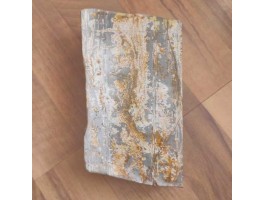
Mikawa White Nagura Natural whetstone Yae Botan (八重ボタン) With Asano Seal


 |
Delivery
|
 |
Оn-line 24/7 We are available 7 days a week 24 hours a day |
 |
Shopping Protection We comply with all warranty obligations for all our products. Buying from us you can be sure of the quality of the goods! |
Mikawa White Nagura Yae Botan natural whetstone (八 重 ボ タ ン) with Asano print
Asano Nagura Yae Botan is known to be around 3000 grit. These Nagura are generally faster and rougher than Botan.
Size and weight
9-37mm x 8-45mm x 20-40mm / 61g
Hardness: 3.0-3.5, medium soft
An excellent stone for razors, knives, chisels, carpentry tools.
How to use Mikawa Nagura as a direct sharpening stone
The abrasive contained in Nagura is quartz, just like the Kyoto Jnat finishing machine, and the reason Nagura is white is because most of it is quartz powder. You can see its performance as a direct sharpening stone and high abrasive ability. Currently, there are few products of the size of a whetstone for direct sharpening, and they are rarely found. Many of the natural bars produced in Kyoto surpass them in particle fineness.
How to get slurry with Nagura
When used with a hard natural whetstone, pour water on the natural whetstone and rub Nagura over the surface of the whetstone to create a Nagura slurry containing the abrasive. If sharpened with this liquid, you can quickly get a good blade.
It is also good to use for removing clogging of the sharpening stone, creating a slurry will definitely speed up the sharpening process.
Using nagura of different grain sizes, you can sharpen your tool on one hard stone.
Mr. Sakamoto recommends letting the naguru sit in water for 5-10 minutes before use. This will make it softer and make it easier to prepare a thin gruel. It also avoids nagura scratches on the main stone. When using just a spray of water and preparing a suspension with a "dry" heat, not only the main stone becomes scratched, but
and stone particles can crumble at an unexpected moment, a beautiful polished bevel can become unpleasantly scratched in the blink of an eye. especially on hard stones!
Soaking the nagura before honing avoids this, 5-10 minutes is enough, leaving it to soak for ½ to 1 hour is also not a problem.
Types of pure Mikawa Shiro Nagura from Asano
There is a seal of approval on the stone 浅 野 (Asano)
* Coma (コ マ):
This is the best grinding power and the best in Mikawa Nagura. (10000+)
Known for its use in polishing the Japanese sword.
In addition, it is difficult to obtain due to the small volume of production.
It applies a very fine scratch pattern to the top and provides a very fine edge.
* Mejiro (目 白):
He is as thin as Coma. (10000+)
* Tenjho (天上):
Both the grinding power and the fineness of the grinding. standard in Mikawa Nagura.
The mining volume is large and easy to use. (6000+)
* Botan (ボ タ ン):
Excellent grinding performance in Mikawa Nagura. (3000+)
* Yae Botan (八 重 ボ タ ン):
Excellent grinding performance in Mikawa Nagura. These Nagura are generally faster and rougher than Botan (3000)
But remember to prepare the slurry before using it with the grindstone.


-265x200.jpg "USAF Extreme Cold Weather Pants, F-1B")