
Japanese Natural Whetstone Shobudani Tomae 936g with Okudono Nagura Selected by Yamamoto for Razors


 |
Delivery
|
 |
Оn-line 24/7 We are available 7 days a week 24 hours a day |
 |
Shopping Protection We comply with all warranty obligations for all our products. Buying from us you can be sure of the quality of the goods! |
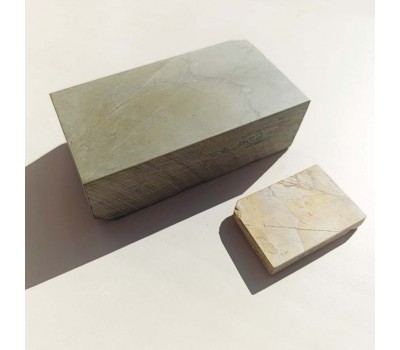
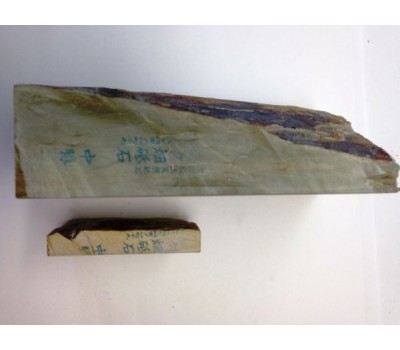
天然砥石 正本山 菖蒲谷 白砥山 戸前 と 奥殿 巣板 名倉付き Natural Shōbu-dani Shirato-yama whetstone from the Tomae layer with Okudono Suita nagura.
Main stone size: 135 x 75 x 40 mm Weight: 936 g Hardness: 4.5-5 Grit: 10000+
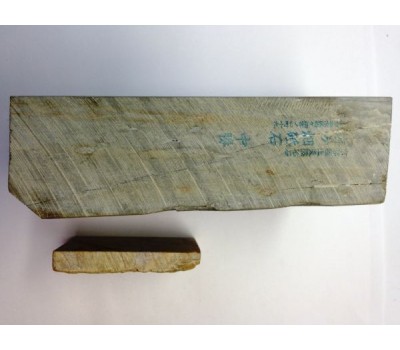
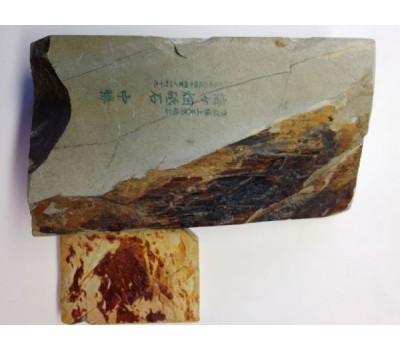
Stamp: 梅ケ畑砥石 中勝 山本男系山主精選 means: Whetstone from Umegahata. Selected by the Yamamoto family (the male line of mine owners). Sold by Nakakatsu.
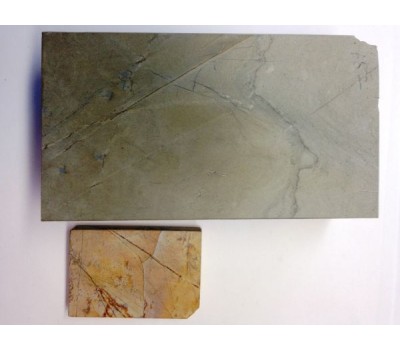
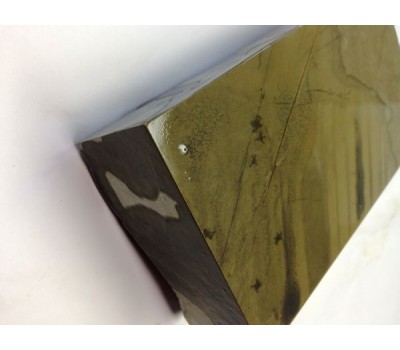
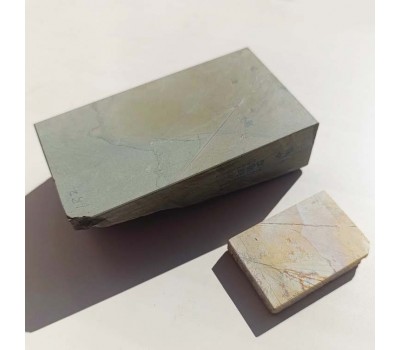
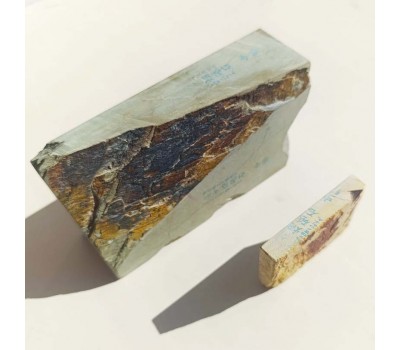
Greenish-gray background; uniform structure; no suita pores; pronounced brown areas of skin (kawa); long yellowish lines do not strike when sharpening;
Very dense layer. Based on its color, it belongs to the so-called Shobu Asagi or light Aisa.
An excellent razor stone.
The seller labeled this small stone as 奥殿巣板名倉 "Okudono Suita Nagura."
Yellow-cream base; red bark; small suita pores. These nagura are valued higher than standard tomo nagura.
Overall, I would rate this example as above average among vintage Shobu-dani Tomae: a good, solid stone of high quality origin and a valuable addition in the form of an Okudono Suita nagura.
he origin of Shoubudani quarry is about 800 years ago.
Shoubudani and Nakayama stones were patronized by the Imperial household, for its superior quality used for polishing swords. These stones have never been traded among the commonality between Kamakura period(1185~1333) to mid Muromachi period (1336~1573). It was at the end of Muromachi when these stones appered within the general market, although the better stones were still monopolised by the royalities, the stones with lines and odd shapes were used by the craftsmen and carpenters, and this contributed to the drastic improvement in quality of their works.
If you are familiar with Japanese natural finishing stones, I suppose you have heard of the name Hon-yama. The name Hon-yama is used by any finishing stones nowadays so it mearly means "finishing stone" now, but this name originally was the nick name for Shoubudani mountain. Nakayama is also one of the quarry from this mountian. Honma Tou-zaemon Toki-nari has been appointed as the leader of mining by the famous Shogun of Kamakura period Minamotono Yoritomo in 1190. Thus the mountain was called Honma's mountain = Hon-yama. "Yama" means mountain. Shoubu-dani and Nakayama stones are the only genuine Hon-yama stone.
-265x200.png "USMC Apecs Gore Tex Desert Cold Weather Jacket")

