Japanese Natural Whetstone Narutaki Mizu Asagi Awasedo 623 g


 |
Delivery
|
 |
Оn-line 24/7 We are available 7 days a week 24 hours a day |
 |
Shopping Protection We comply with all warranty obligations for all our products. Buying from us you can be sure of the quality of the goods! |
Asahi Tora Hon Narutaki Mizu Asagi — Honzan Awasedo
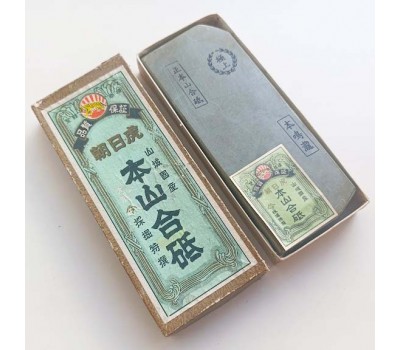
A beautiful old Japanese natural finishing stone (Honzan Awasedo) originally sold under the 朝日虎 (Asahi Tora) brand. Stones of this type were commonly sold through specialist Japanese shops during the second half of the 20th century, particularly in the 1960s–1980s.
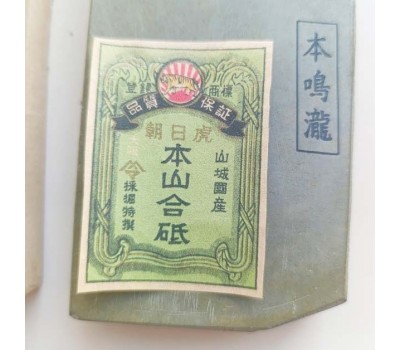
The original label identifies the stone as:
- 朝日虎 — Asahi Tora — “Morning Tiger,” the trade name.
- 本山合砥 — Honzan Awasedo — Kyoto natural finishing stone.
- 特選 — Tokusen / Special Selection — specially selected premium grade.
Stamps on the Stone
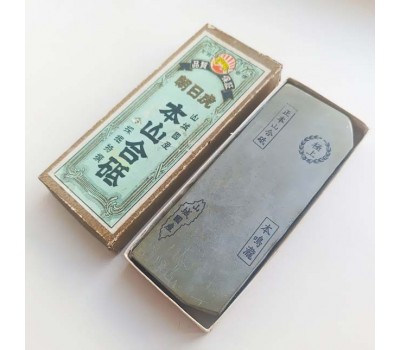
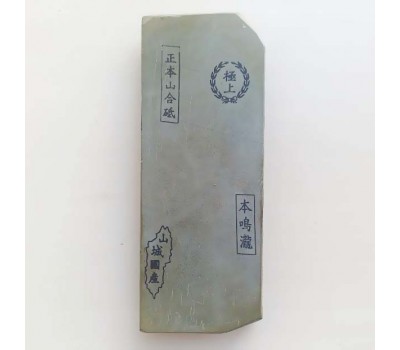
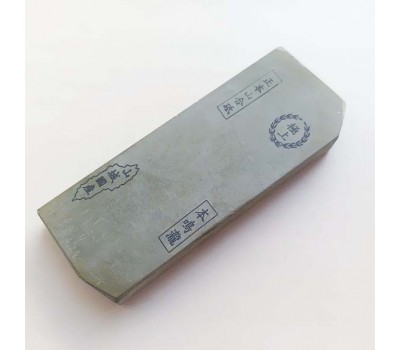
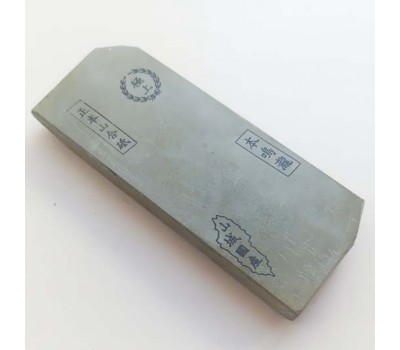
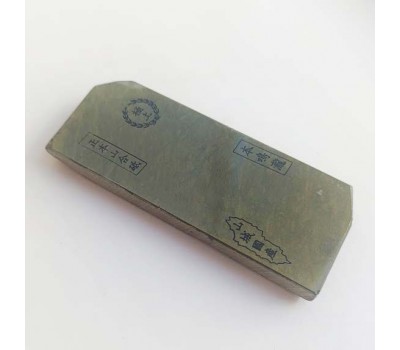
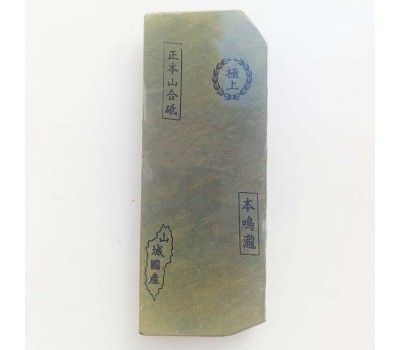
What makes this particular example especially interesting is the presence of several original markings directly on the stone:
本鳴瀧 — Hon Narutaki — genuine natural finishing stone from the historic Narutaki area of Kyoto.
正本山合砥 — Shōhonzan Awasedo — genuine Honzan natural finishing / polishing stone.
The circular stamp reads:
極上 — Gokujō — superior / highest grade.
極上一本選 = gokujō Ippon-sen = The only best choice
Many Asahi Tora (朝日虎) stones carried their main identification only on the paper box label or on a label attached directly to the stone. Specific provenance markings such as 奥殿 (Okudo), 菖蒲谷 (Shoubudani), 中山 (Nakayama), or 本鳴瀧 (Hon Narutaki) are not found on every surviving example.
The additional 本鳴瀧 — Hon Narutaki marking therefore makes this particular stone especially interesting and adds to its collectible value.
About the Stone
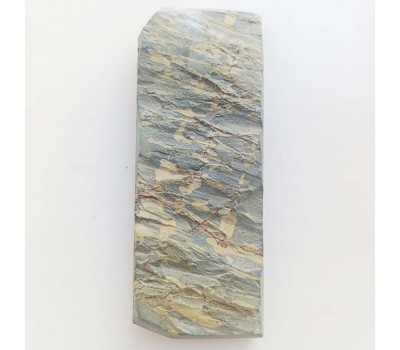
An excellent old Hon Narutaki Awasedo with an exceptionally dense and homogeneous structure.
The stone is very clean, highly dense, and absorbs water slowly. Despite its high hardness, it cuts relatively quickly while maintaining an exceptionally fine and uniform abrasive structure.
These characteristics make it particularly suitable for final honing of straight razors, where consistency, surface refinement, and precise edge control are essential. It is also an excellent finishing stone for traditional Japanese woodworking tools and premium knives.
The stone produces a clean, extremely fine, and easily controlled slurry, allowing for a very refined finish.
Color — 水黄板 / Mizu Asagi
The coloration can be described as Mizu Asagi, a cool gray-blue to watery gray shade associated with the Asagi color family.
The working surface is exceptionally clean:
- no obvious Karasu or other potentially problematic inclusions;
- very dense and homogeneous structure;
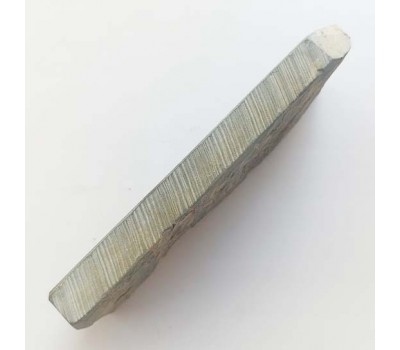
- the underside shows characteristic signs of old hand finishing and preserved areas of the natural layer.
Specifications
- Dimensions: 195 × 75 × 19 mm
- Weight: 623 g
- Hardness: Approximately Lv 4.5 / 5
- Estimated Grit: #10,000+
- Color: Mizu Asagi
- Type: Honzan Awasedo
- Origin: Hon Narutaki, Kyoto
- Recommended for: Straight razors, woodworking tools, and premium knives
- Slurry: Extremely fine, clean, and easy to control
Box and Label Markings
品質保証 — Hinshitsu Hoshō — Quality Guaranteed.
朝日虎 — Asahi Tora — Trade name.
本山合砥 — Honzan Awasedo — Honzan natural finishing stone.
山城国産 — Yamashiro-koku san — Produced in Yamashiro Province, the historic province encompassing the Kyoto area.
吟味採掘特撰 — Ginmi Saisutsu Tokusen — Carefully selected during quarrying / Special Selection grade.
These markings are representative of high-quality commercial Japanese natural whetstones of the period.
Historical Background — Narutaki (鳴滝)
Narutaki (鳴滝) is one of the oldest and most famous names associated with Japanese natural finishing stones from Kyoto.
Historically, the whetstone-producing area covered a substantial part of western Kyoto, and the term Narutaki-to (鳴滝砥) could therefore be used more broadly in historical sources than the name of a single specific mine. Official Kyoto Prefecture materials associate the famous Narutaki whetstones with the area extending from Takao toward northern Saga.
Whetstone quarrying in this region has a history extending back many centuries. The historical importance of Narutaki is such that in 2016, the Geological Society of Japan selected 鳴滝砥石 (Narutaki whetstone) as the official “Prefectural Stone” of Kyoto Prefecture.